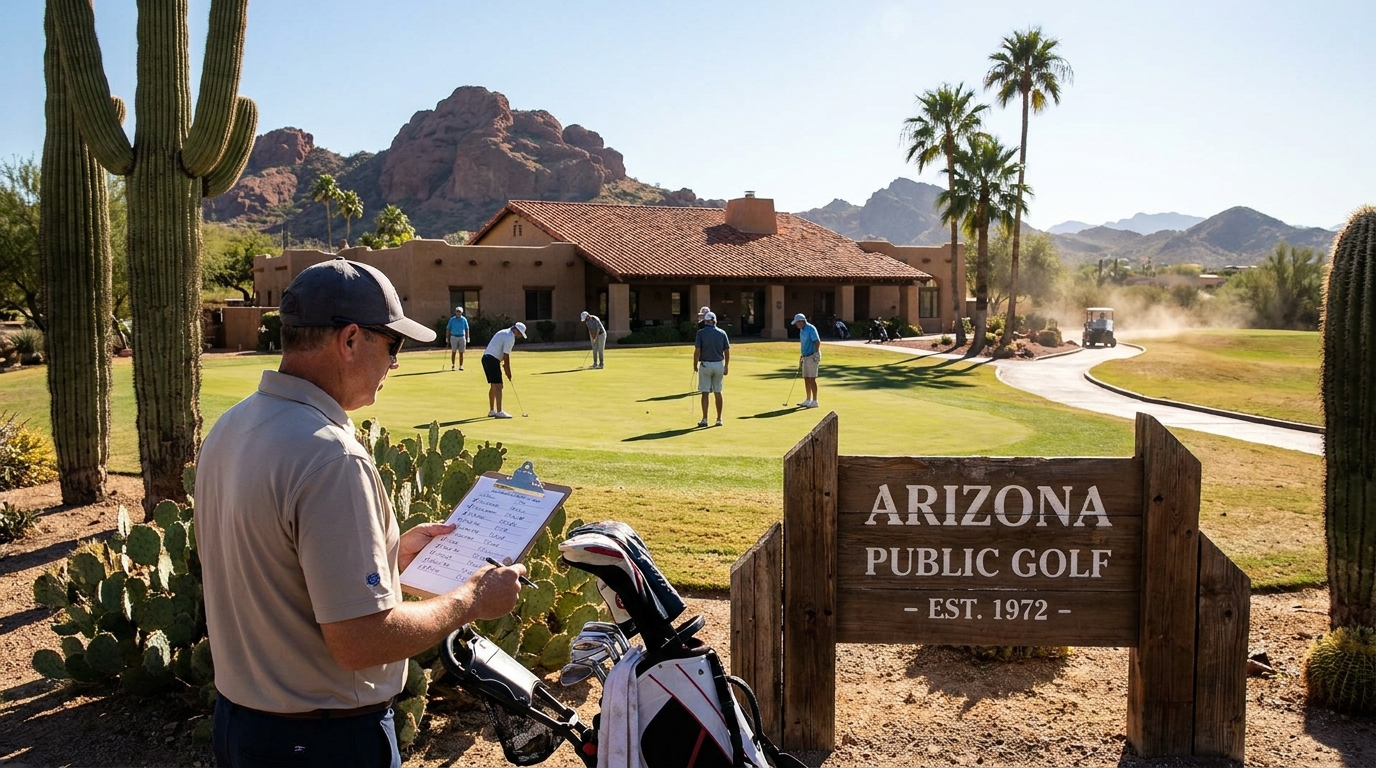
You've got a free Saturday. Maybe a buddy in town. Maybe you're new to the game and ready to graduate from the range. Either way, the question hits: where should you actually play?
Phoenix has options. A lot of them. But not every public course is built the same — and the difference between a great round and a frustrating one usually comes down to a handful of things you can spot before you ever tee off.
Here's the checklist we'd hand any golfer trying to evaluate a public course in the Valley.
1. Course Conditions That Hold Up in the Desert
This is the big one.
Phoenix golf is brutal on turf. Summer surface temps can push past 150°F. Winter overseeding cycles change how a course plays from October through April. And water restrictions across Maricopa County mean every superintendent has to be smart about how they manage their grass.
What to look for:
- Green speed and consistency. Do the greens roll true? Are they firm without being baked out?
- Fairway coverage. Patchy lies and bare spots tell you the course isn't being maintained well — or isn't being watered intelligently.
- Bunker quality. Sand should be fluffed, not packed like concrete.
- Overseeding transitions. A good Phoenix course handles the fall overseeding window (typically late September into October) without leaving the property looking like a construction site for a month.
One reviewer summed up the Dobson Ranch experience this way: "Greens roll very well almost every hole is unique." That's the bar.
2. Practice Facilities That Actually Help You Improve
A driving range is table stakes. A real practice facility is something else.
The best public courses in Phoenix have invested in:
- Shaded hitting bays (non-negotiable from May through September)
- Shot-tracking technology so you can see carry distance, spin, and dispersion
- A short-game area with a chipping green and practice bunker
- A putting green that matches the speed of the course greens
If a course only has a flat mat and a netted range, you're paying to warm up — not to get better. Dobson Ranch is one of the Phoenix courses that's leaned into this, with shaded practice bays and shot tracker built into the bay setup. Worth checking before you book.
3. Layout Variety and Walkability
A good public course gives you holes that feel different from each other. Doglegs. Elevation changes. Risk-reward par 5s. Forced carries you actually have to think about.
Cookie-cutter layouts get boring by hole 6.
Also worth considering in Phoenix specifically: how punishing is the desert? Some Valley courses are gorgeous but unforgiving — one stray drive and you're either reloading or hunting through cholla. A more forgiving public layout (sometimes called a "parkland-style" or non-target course) gives recreational players a better experience without sacrificing challenge for low handicaps.
4. Pace of Play and Tee Sheet Management
Nothing kills a round like a 5.5-hour slog.
Signs a course manages pace well:
- Reasonable tee time spacing (8-10 minutes minimum)
- Marshals who actually circulate
- A starter who briefs groups on expected pace
- Honest online booking that doesn't oversell the morning blocks
Ask around or check recent reviews. Phoenix courses get slammed during snowbird season (roughly November through April), and the ones that don't manage their tee sheets carefully turn into traffic jams.
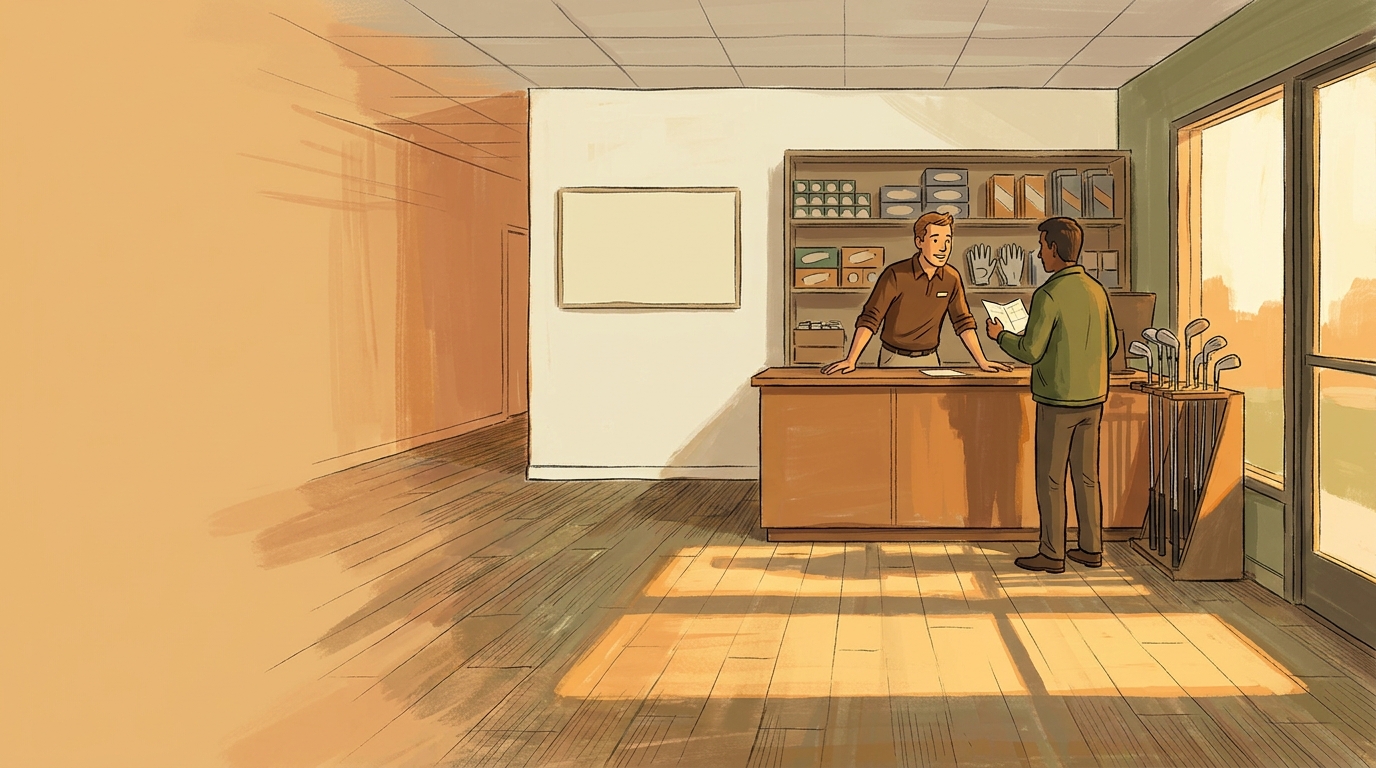
5. Staff That Treats You Like a Regular
You can tell within five minutes.
The bag drop attendant. The pro shop staff. The starter. The beverage cart driver. Are they engaged? Helpful? Do they remember you on the second visit?
This is where Dobson Ranch's 4.6★ rating across more than 1,500 Google reviews tells a story. Customers consistently call out the staff — one recent reviewer described the team as "top notch" and shared how an employee made a point to grab them an electrolyte drink mid-round just because she had time. Small thing. Tells you everything.
6. Honest Value for What You're Paying
Phoenix green fees swing wildly by season. A round that costs $45 in August might run $140 in February. That's the market.
What you're evaluating isn't the sticker price — it's whether the experience matches it.
Things that signal good value:
- Cart and range balls included or fairly priced
- Replay rates for afternoon rounds
- Twilight pricing that actually saves you money
- Loyalty programs or resident rates (many municipal-affiliated courses offer Phoenix and Mesa resident discounts)
7. Food, Drink, and the 19th Hole
You just walked 18 holes in 95-degree heat. The clubhouse matters.
Look for a grill that does more than microwave hot dogs, a patio with shade, and a beverage cart that actually shows up. Bonus points if there's a vibe — music, a crowd, somewhere you'd actually want to stick around with your group after the round.
8. Event and Group Hosting Capability
Even if you're just booking a tee time today, a course's ability to host tournaments, corporate outings, and birthday parties tells you a lot about its operational depth.
If the staff can pull off a 100-person scramble smoothly, your foursome on a Tuesday morning is in good hands.
FAQ: Choosing a Public Golf Course in Phoenix
How do I evaluate a golf course before I book?
Check recent Google and course-specific reviews (look at the last 90 days, not all-time), scan photos of the greens and fairways, confirm what's included in the green fee, and see if they have a shaded practice area. Reviews from the current season tell you more than the course's own marketing.
What golf course features matter most for beginners?
Forgiving fairways, accessible practice facilities, friendly staff, and pace-of-play marshals who'll keep faster groups from pressuring you. A course that welcomes beginners feels welcoming from the parking lot in.
When is the best time of year to play public courses in Phoenix?
October through May is peak season — perfect weather, but higher prices and busier tee sheets. June through September means heat, but also deep discounts and wide-open mornings if you tee off early. Many locals swear by the 6 a.m. summer rounds.
What's a fair green fee for a quality public course in Phoenix?
It varies dramatically by season. Expect $40-$70 in summer and $90-$150 in peak winter for a quality public course with good conditions and practice facilities. Twilight and resident rates can cut that significantly.
The Bottom Line
A good public golf course in Phoenix isn't just about a pretty layout. It's the conditions, the practice setup, the staff, the pace, the value, and whether you actually want to come back next weekend.
Golfers in Phoenix looking for a course that checks most of these boxes can take a look at Dobson Ranch Golf Course at https://www.dobsonranchgolfclub.com/ — the team there can walk you through tee times, practice bay reservations, and event bookings.
Get out there. The desert's waiting.