You've been to the range. You bought the bucket. You bashed 60 drivers in 20 minutes, walked back to the car with a sore lower back, and somehow shot the same score on Saturday.
Sound familiar? Yeah. We've all been there.
Here's the truth: how you practice matters way more than how often. A focused 45-minute session beats two hours of mindless ball-beating every single time. And in Mesa, where summer afternoons can push past 110°F and the winter overseed is hosting half of Canada, your range time is genuinely precious.
So let's talk about how to practice golf effectively — the kind of practice that actually moves your handicap.
Why Most Golfers Waste Their Range Time
Most range sessions look like this: dump the bucket, grab the 7-iron, hit until it feels okay, switch to driver, swing out of your shoes, leave frustrated.
That's not practice. That's exercise.
Effective golf practice is about intent. Every ball should have a target, a club, a shot shape, and a purpose. If you can't answer "what am I working on right now?" — you're not practicing. You're just hitting balls.
The good news? Fixing this is simple once you know the structure.
The 3-Part Driving Range Practice Plan
A solid golf practice routine breaks into three phases. Stick to this and you'll improve faster than 90% of the golfers next to you.
1. Warm-Up (10–15 minutes)
Start small. Always.
- Five minutes of stretching — shoulders, hips, lower back
- 20 half-swings with a wedge to a close target (30–50 yards)
- 10 three-quarter swings with a 9-iron
- 10 full swings with a 7-iron to a specific flag
You're not trying to fix anything yet. You're waking up your body and finding your tempo. Especially important in Mesa during the cooler December–February mornings, when your back is going to feel like a rusty hinge until you ease into it.
2. Block Practice (15–20 minutes)
This is where you work on one specific thing. Not five things. One.
Pick a swing thought or a shot — say, a low punch with the 8-iron, or holding off the face on a wedge to kill spin. Hit 15–25 balls focused entirely on that move. Same club, same target, same goal.
This is how mechanics get rewired. Repetition with intent.
3. Random Practice (15–20 minutes)
Here's the part almost everyone skips — and it's the most important.
Stop hitting the same club twice in a row. Play imaginary holes. Driver, then 8-iron to a flag, then a 60-yard pitch. Change targets. Change clubs. Go through your full pre-shot routine every single time.
This is how range work transfers to the course. Golf is a random sport — you never hit the same shot twice in a round. Train it that way.
Use Technology — But Don't Let It Use You
Launch monitors and shot trackers are everywhere now, and they're game-changers when used right. Numbers don't lie. If you think you carry your 7-iron 165 but the monitor says 148, that's information you can actually use to score.
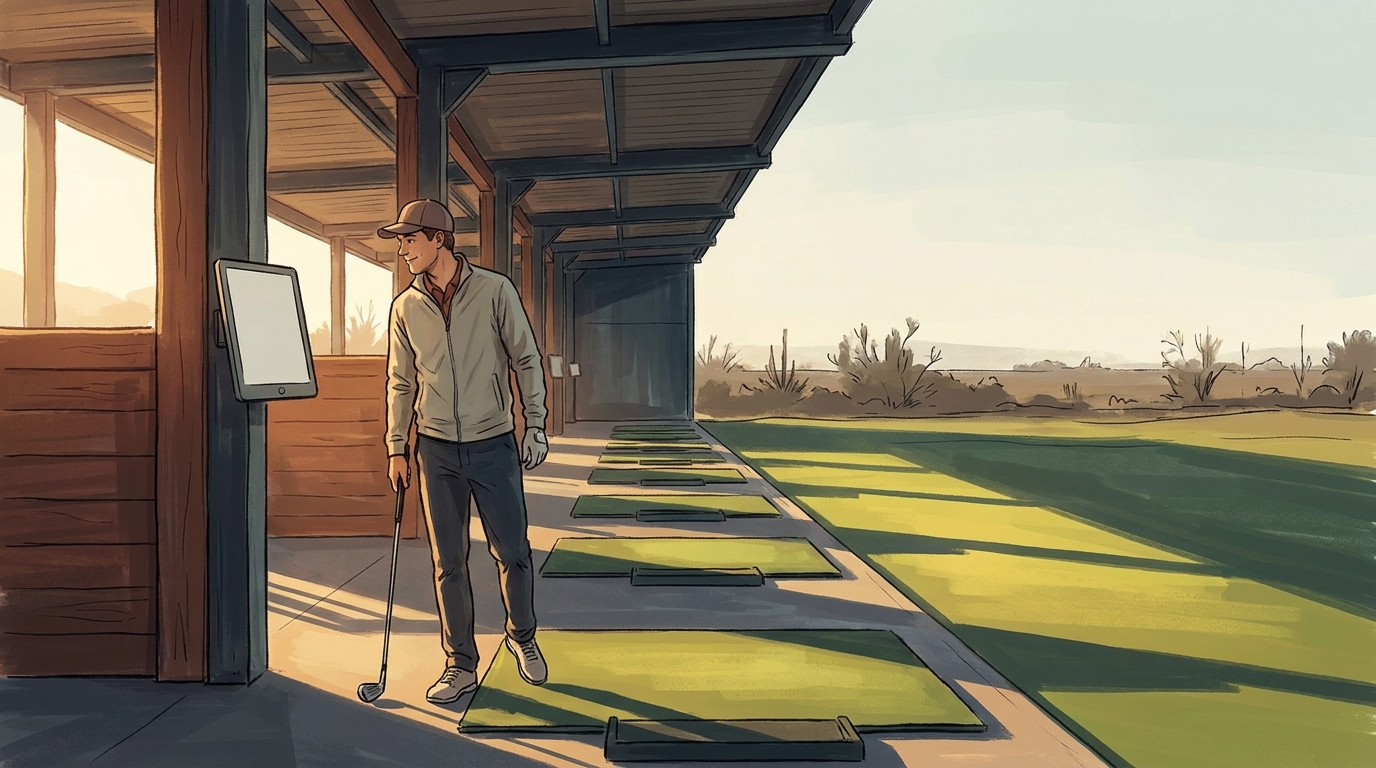
Dobson Ranch Golf Course operates Smashers On Driving Range, featuring Inrange-powered bays with practice and games for all levels — and food and drinks delivered right to your bay. One customer wrote that the Inrange technology was "extremely accurate," with staff on hand making sure everything was running smoothly. The range is open after dark and walk-in access requires no reservation, which makes it easy to fit a focused session into any schedule. Those covered bays are no small thing when you're practicing in July.
That said: don't get lost in the numbers. Spin rates and launch angles are useless if you're not also working on hitting your targets. Use the tech to verify, not to obsess.
Practice Short Game More Than You Think You Should
Quick math: roughly 60–65% of your shots in a round happen inside 100 yards. How much of your range time goes there?
If you're honest, probably 20%. Flip that.
For every hour at the range, spend at least 30 minutes on:
- Wedges from 30, 50, 70, and 90 yards — learn your distances cold
- Chipping with three different clubs — 8-iron bump, pitching wedge, lob wedge
- Putting with purpose — speed drills from 20–40 feet, then 3–6 footers until you've made 25 in a row
This is where strokes actually disappear from your scorecard.
Practicing in the Mesa Climate
Practicing golf in Mesa is a different animal than practicing in, say, Seattle. The desert rewards smart timing.
- May through September: Early morning or after 6 PM. The 100°+ afternoons aren't just uncomfortable — they actively hurt your practice quality. Dehydration tanks your focus before your swing falls apart.
- October through April: Prime time. This is when snowbirds flood the East Valley and tee times get tight, so range sessions become an even more valuable way to keep your game sharp between weekend rounds.
- Hydration: Non-negotiable. Electrolytes, not just water. The dry air evaporates sweat before you notice it.
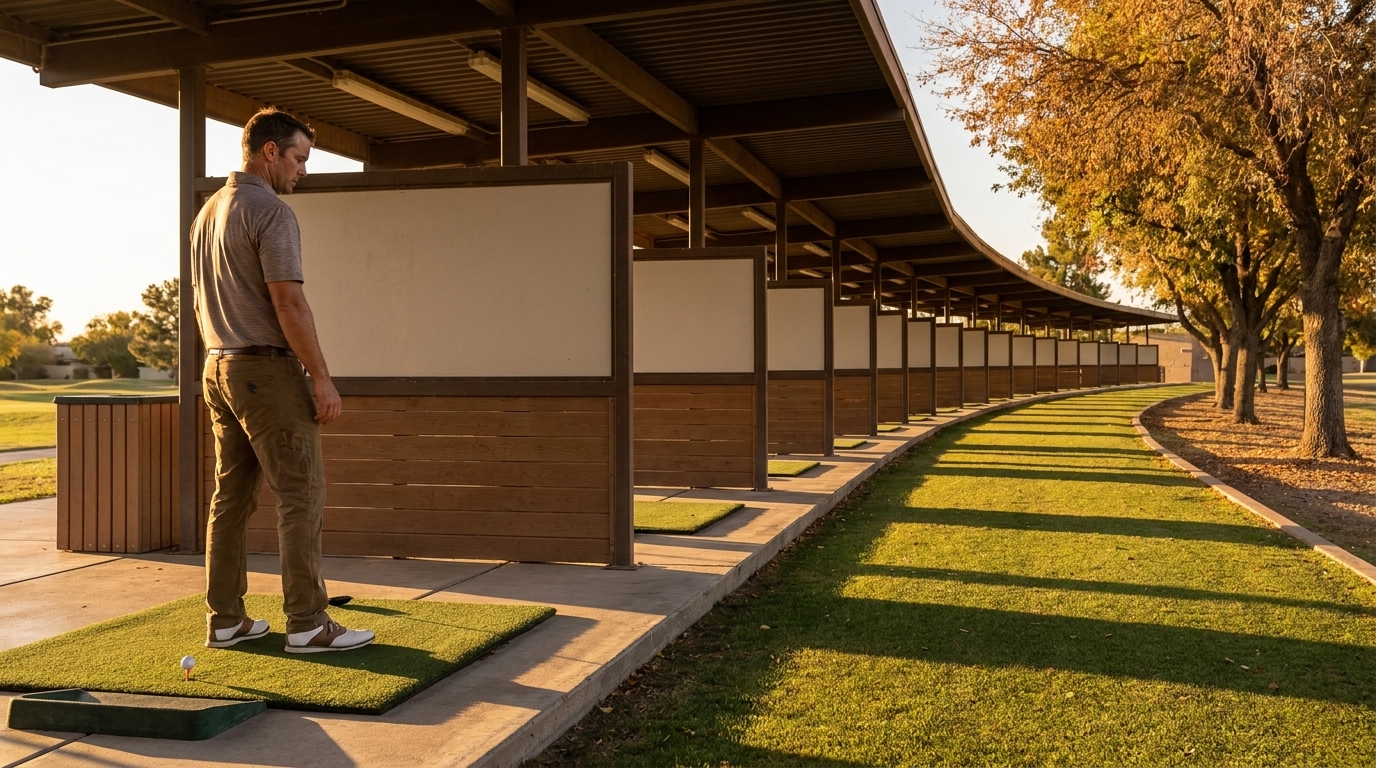
Covered practice bays matter here more than almost anywhere else in the country. If you can practice without baking, you'll practice more — and better.
How to Improve Your Golf Skills Faster
Want the shortcut? Here it is:
- Track every range session. Notes app, journal, whatever. What did you work on? What clicked? What didn't?
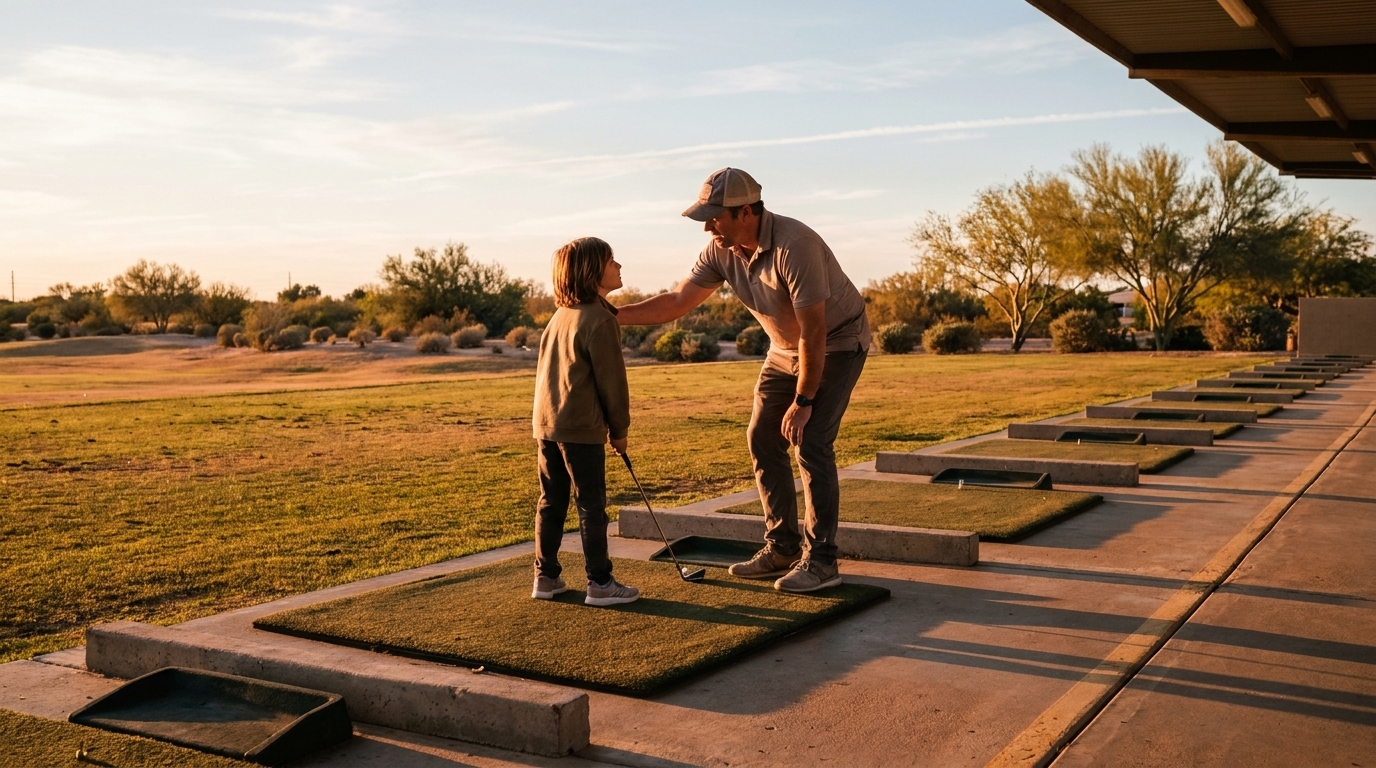
- Take a lesson every 4–6 weeks. Even good players develop blind spots. Dobson Ranch Golf Course has on-site golf instructors who can catch them.
- Practice with consequence. Make yourself do 10 push-ups for every missed 6-footer. Sounds dumb. Works incredibly well.
- Play practice rounds with one ball. No mulligans. Score everything. Build the muscle of recovering from bad shots.
- End every session on a good shot. Your brain remembers the last rep most vividly. Don't walk away after a chunky 7-iron.
FAQ: Effective Golf Practice
How long should a golf practice session be?
45 to 90 minutes is the sweet spot. After about 90 minutes, focus drops and you start grooving bad habits. Shorter and sharper beats longer and sloppier — every time.
How often should I go to the driving range?
Two to three focused sessions per week is plenty for most golfers. If you can only go once, make it count by following a structured plan instead of just hitting balls.
Should I practice with a launch monitor every time?
Not necessarily. Use it for block practice and dialing in distances. For random practice and short game feel, sometimes it's better to just look at the target and trust your eyes.
What's the single best drill to improve fast?
The "one ball, full routine" drill. Every single range ball gets your complete pre-shot routine — visualize, align, breathe, swing. It's tedious. It works.
Do I need a coach to practice effectively?
No, but you'll plateau faster without one. Even a single lesson every couple of months gives you specific things to work on, which makes every range session more productive.
Is it worth using a golf simulator or game-based range technology to practice?
Absolutely. Game-based technology like Inrange keeps practice engaging, which means you stay focused longer and put in more quality reps. The key is to treat the games as random-practice simulations — change targets, play virtual holes, and go through your full pre-shot routine even when it's "just a game."
What's the best way to practice golf if I only have 30 minutes?
Skip the warm-up driver session and go straight to structure: five minutes of light stretching, ten minutes of wedge work to specific targets, then fifteen minutes of random practice rotating through three or four different clubs. End on short putts. A tight 30-minute block with full intent beats an aimless hour every time.
Putting It All Together
Effective practice isn't about hitting more balls. It's about hitting balls with a plan — warm-up, block, random, short game, repeat. Add some tech, respect the Mesa heat, and you'll see the scorecard catch up to the work.
Golfers in the East Valley looking for a practice facility with covered bays, Inrange shot technology, on-site instruction, and a full short-game area can find all of that at Dobson Ranch Golf Course in Mesa — Arizona's most fun, friendly, and affordable golf experience, open Monday through Sunday from 5 AM to 9 PM with no reservation required for the range. Rated 4.6 stars from 1,628 Google reviews as of August 2026, range hours and lesson info are available at https://www.dobsonranchgolfclub.com/ — bring your A-game, or don't. Either way, the range is open.
"