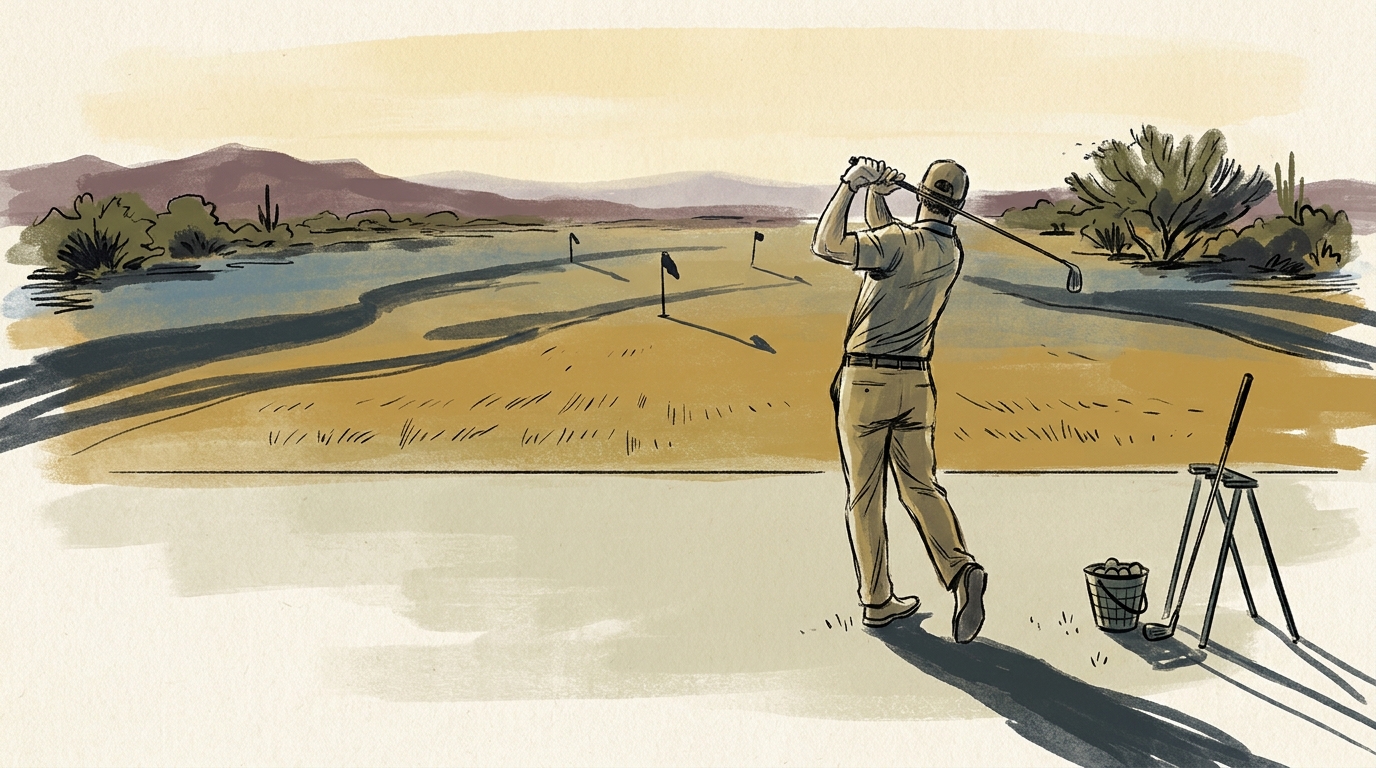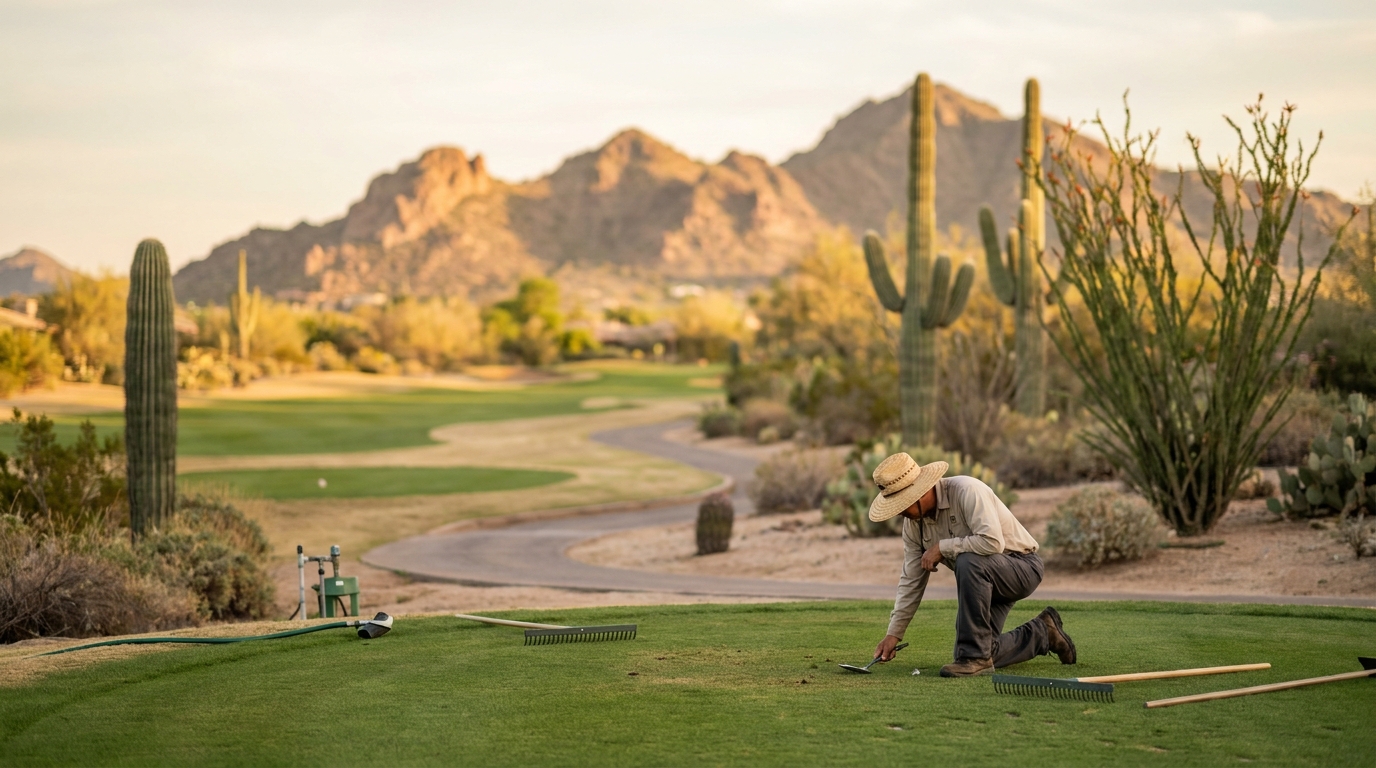
You're loading the clubs, the sun's already cranking, and the question hits you: what shape is the course actually in today? Greens rolling true? Fairways tight? Overseed wrapping up? In Mesa, where the desert dictates everything from watering windows to aeration timing, course conditions aren't a small detail — they're the round.
So let's break down what actually drives golf course conditions in Mesa, Arizona, how maintenance crews keep things rockin' through brutal summers and packed snowbird winters, and what you should look for in a course quality update before you book your tee time.
Why Golf Course Conditions in Mesa Are Their Own Animal
Mesa sits in the heart of the Sonoran Desert. Summer highs are extreme, well into triple digits. Winters? Pure golf paradise — mild temperatures, blue skies, and a flood of seasonal visitors.
That climate split creates a maintenance calendar unlike almost anywhere else in the country. Courses here juggle two grass types, two playing seasons, and water restrictions that don't mess around.
Most Mesa courses run Bermuda grass through the warm months — it loves the heat and bounces back from foot traffic. But when nights cool down and Bermuda goes dormant, courses overseed with ryegrass to keep that lush green look snowbirds expect.
That overseed window? It's the single most important date on your calendar if you care about course quality.
The Mesa Maintenance Calendar You Should Actually Know
October: Overseed Season
Most Mesa courses, including those in the Dobson Ranch area, shut down or run limited play for a stretch in October. Crews scalp the Bermuda, broadcast ryegrass seed, and water like crazy to germinate it.
If you tee off the week after overseed reopens, expect soft fairways and tender greens. Give it a few weeks and the course transforms.
November Through April: Peak Season
This is when Mesa golf earns its reputation. Greens roll fast. Ryegrass fairways look like carpet. Crews mow daily, roll greens, and chase divots all day long.
That's what a dialed-in overseed and tight maintenance schedule gets you.
May Through June: The Transition
Ryegrass starts to fade as soil temps climb. Bermuda wakes back up. There's a stretch where courses look patchy — that's not neglect, that's biology. Crews verticut, topdress, and slowly transition back to Bermuda dominance.
July Through September: Summer Aeration and Survival Mode
Monsoon season hits with thunderstorms, microbursts, and the occasional flooded bunker. Courses aerate greens (usually mid-summer) to relieve compaction and let roots breathe. Play is cheaper, the course is softer, and conditions are honestly really fun if you can handle the heat or play at sunrise.
What a Real Course Conditions Update Should Tell You
A good condition report in Mesa goes beyond "course is open." Here's what you actually want to know before you book:
- Greens status: Recently aerated? Topdressed? Rolling at what speed?
- Cart path rules: Cart-path-only after monsoon storms is common July through September
- Overseed timing: Pre-overseed, in transition, or fully grown in?
- Bunker conditions: Freshly raked, packed from rain, or under renovation?
- Tee box rotation: Which tees are in play during transition periods
- Practice facility status: Range mats vs. grass, short game area access
Courses that publish these updates regularly — on their website, social, or via the pro shop — are telling you they take operations seriously. Dobson Ranch Golf Course, for example, treats practice facility transparency as part of the experience, with covered range bays, InRange shot-tracking technology, and clear communication about what's open.
Water, Regulations, and Why Mesa Courses Work So Hard
Arizona's water situation is real. Arizona's water regulations and regional water delivery systems shape how every course budgets its watering schedule.
What that means for you: courses can't just dump water to mask problems. Smart Mesa operators rely on soil moisture sensors, GPS-guided irrigation heads, and aggressive overnight watering windows to keep turf healthy while staying within allotments.
When you see a Mesa course in great shape, that's not luck — that's a superintendent making 50 small decisions a day about water, mowing heights, and traffic patterns.
How to Read Course Quality in Mesa Before You Play
Check Recent Reviews From the Last 30 Days
Conditions shift fast here. A glowing review from March tells you nothing about July. Filter for recent.
Look at the Practice Facility
If the range, putting green, and short game area are dialed, the course usually is too. It's the tell. One customer described Dobson Ranch Golf Course as a place where the "range, employees, and club house are immaculate" — that kind of operational standard carries across the entire property. InRange technology at the bays gives players real launch data after every swing, signaling the investment courses make when they take conditioning seriously.
Call the Pro Shop
Seriously. Two minutes on the phone gets you better intel than any website. Ask about greens speed, cart restrictions, and whether anything's under maintenance.
Check Tournament and Event Activity
Courses hosting charity events and tournaments through peak season are usually well-conditioned — they have to be. Active tournament schedules are a reliable signal that a course is keeping conditions sharp all season long.
FAQ: Golf Course Conditions in Mesa, Arizona
When is the best month to play in Mesa?
Mid-November through March. Overseed is fully grown in, temps are perfect, and conditions are at their peak. February and March are especially dialed.
How long does overseed actually take?
Most Mesa courses close or limit play for a period in October. Full recovery to peak conditions takes additional weeks after reopening.
Are summer rates worth it if conditions are softer?
Absolutely, if you can play early. Twilight and sunrise rounds in June through September offer big value, and Bermuda actually performs really well in heat. Just expect occasional cart-path-only days after monsoon storms.
Why do greens get aerated and when?
Aeration relieves soil compaction and lets roots breathe. Mesa courses typically aerate greens at least once during the year, often in summer, and sometimes do an additional pass in fall. Expect a stretch of slower, bumpier greens after aeration.
How do I find current conditions for a specific Mesa course?
Course website updates, social media posts, or a quick pro shop call. The good operators publish weekly or post when anything changes.
Does the driving range stay open during course maintenance or overseed periods?
In many cases, yes. Practice facilities often operate on a separate maintenance schedule from the course itself, so the range may remain open even when the course limits play during overseed. At Dobson Ranch Golf Course, the driving range — including covered bays with InRange technology — has been noted by customers as open after dark and operational during periods when course access is reduced. Contact Dobson Ranch Golf Course directly at (480) 644-2291 to confirm current range hours before heading out.
What should I expect when playing Mesa courses right after a monsoon storm?
Monsoon storms — common July through September — can leave bunkers packed with water, cart paths slick, and fairways temporarily soft. Most courses switch to cart-path-only rules immediately after heavy rain. Drainage quality varies by course, so conditions can recover within hours or take a full day. Calling the pro shop the morning after a storm gives you the most accurate picture before you make the drive.
Putting It All Together
Course conditions in Mesa aren't static — they're a living calendar of overseed, transition, monsoon, and recovery. Once you understand the rhythm, you stop being surprised and start planning rounds around it.
The courses worth your loyalty are the ones that communicate clearly, invest in their practice facilities, and treat water and turf with the seriousness Mesa demands. Players in Mesa, AZ who want a course that takes conditions seriously can check current updates and book through Dobson Ranch Golf Course at https://www.dobsonranchgolfclub.com/ — a public course in the heart of Mesa with a 4.6★ rating from over 1,628 Google reviews as of August 2026, and a maintenance team that takes the desert seriously.
"