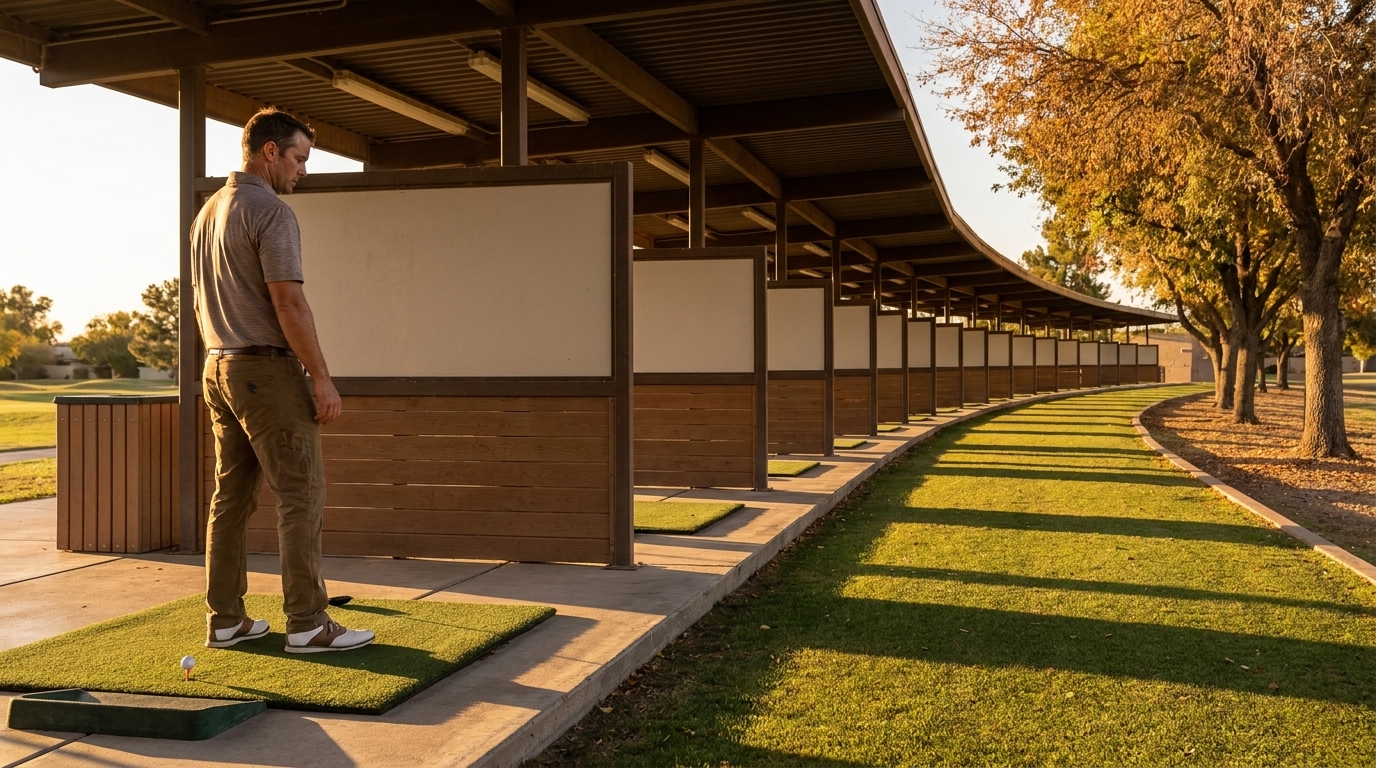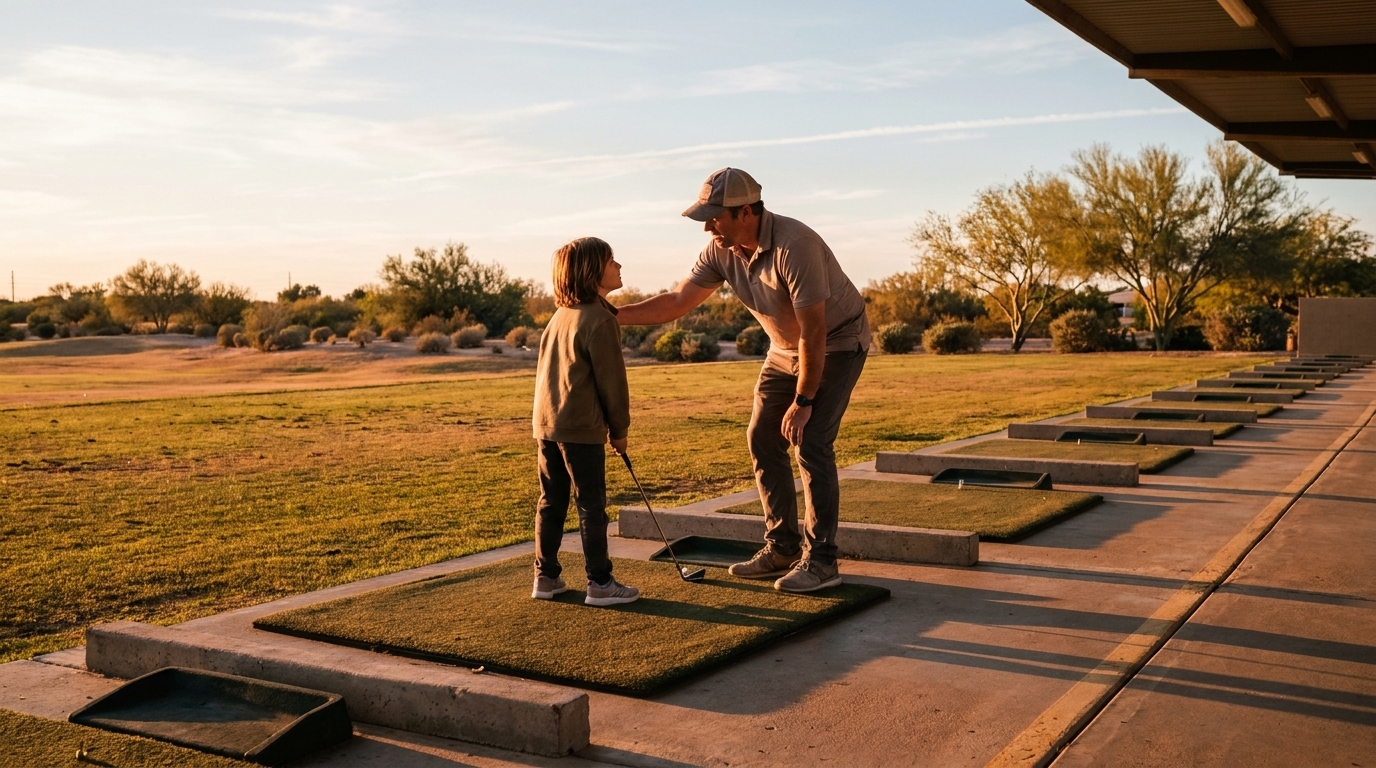
For golfers living in Sunland Springs Village, a combined golf course and driving range in Mesa AZ almost always beats splitting your practice and play between two locations — it saves a second drive across town, cuts your total spend by consolidating range balls into the same visit as your round, and lets you warm up on the exact turf conditions you're about to face. The catch: not every combined facility is built the same, and the tech, tee style, and range access rules matter more than the sticker price.
This guide takes you under the hood of how the combined model actually works in east Mesa, why it's especially convenient from the Sunland Springs Village pocket off Signal Butte and Baseline, and what to look for so you're not paying resort prices for a range you'll barely use.
What does a combined golf course and driving range in Mesa actually give you?
A combined facility means one property houses both the 18-hole (or 9-hole) course AND a full driving range, short-game area, and pro shop — so you park once, warm up, play your round, and grab food without leaving. In Mesa, that typically bundles range balls, cart, green fee, and post-round dining under one tab, and often unlocks twilight and player-card pricing that standalone ranges can't match.
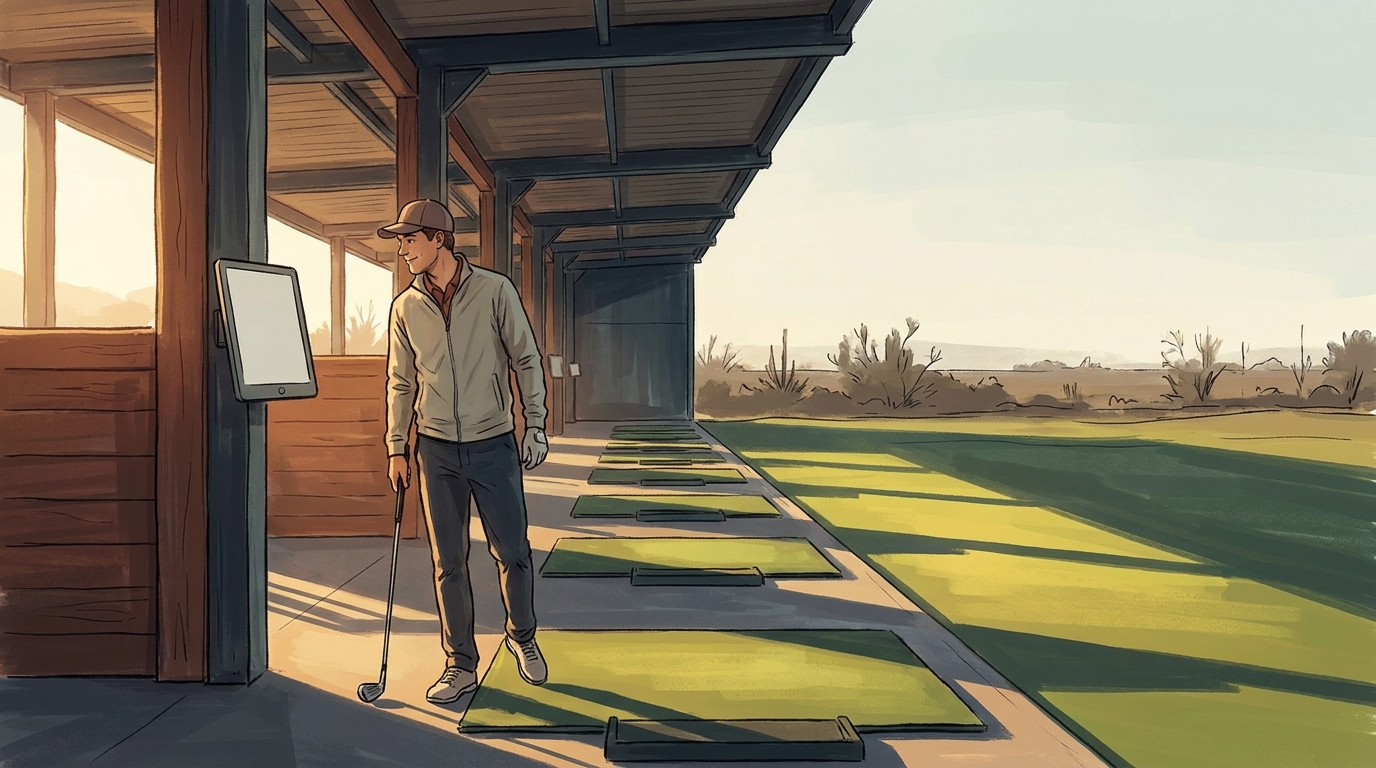
The mechanism is simple: range balls get discounted or included when you're a paying golfer that day, staff can route you directly from the last range ball to the first tee, and — increasingly in the Mesa market — the range itself doubles as an evening entertainment venue with tracked shot data. Dobson Ranch Golf Club, for example, runs its range under the "Smashers On Driving Range" concept powered by Inrange technology, with reservable bays, food and drinks delivered to the bay, and games layered on top of straight practice.
Why does this matter specifically for Sunland Springs Village golfers?
Sunland Springs Village sits in far east Mesa near Signal Butte and Baseline, which means most golfers here already build in a 15-25 minute drive to reach a full-service course with a real range. Doubling that drive to hit a separate range beforehand kills the whole morning — a combined facility is the difference between one trip and two, and in Mesa's summer heat that's the difference between practicing and skipping practice entirely.
The neighborhood skews toward active retirees and snowbirds — the same demographic that plays four to six mornings a week from November through March. That volume of play is exactly where the combined model pays off: range access folded into a players-card program (Dobson Ranch runs one) compounds savings fast when you're teeing it up that often. For golfers willing to drive across town to a technology-forward range, the trip from Sunland Springs Village west on US-60 to Dobson Ranch is a straight shot.
How does the pricing actually work under the hood?
Expect three cost buckets at a Mesa combined facility: green fee (roughly $30-$60 at standard 18-hole public courses in shoulder season, higher during the November-March peak, with resort-tier courses like Arizona Golf Resort at a published $69), a bucket of range balls ($7-$15 depending on size), and cart/food add-ons. Bundle them and the combined model typically undercuts a two-stop day by $10-$20 once you count fuel and time.
Where the math gets interesting is on the practice side. If you're only hitting the range, a large bucket at a Mesa public course generally runs $8-$12 (using the 500 Club in Glendale as a regional benchmark — Mesa-specific range pricing varies by course). At a facility with tracked-shot tech like Inrange or Toptracer, you're paying for a bay by time, not by bucket, which changes the calculation entirely for a serious practice session.
What you're actually paying for in a tech-equipped bay
Launch angle, ball speed, carry distance, and shot-shape data after every swing. That's the mechanism behind why players are shifting range time from entertainment venues to golf-course ranges that now carry the same tech at course-golfer prices.
What should you look for when picking a combined facility from Sunland Springs Village?
Prioritize five things in this order: (1) range tee type — grass vs mat, and whether mats are covered for summer sun; (2) tracked-shot technology if you actually practice with intent; (3) evening hours, since Mesa's summer heat pushes play and practice into twilight; (4) a players-card or membership program that folds range access in; and (5) a food-and-beverage setup that makes the trip worth the drive.
Mesa has dozens of public courses with on-site ranges, from value par-3 setups to resort-tier facilities, so the differentiator isn't availability — it's fit. Dobson Ranch, a municipal 18-hole par-72 course open since 1974 and rated the #1 municipal course in Arizona by Golf Digest, is a strong reference point because it combines the affordable municipal price band with the range tech usually reserved for entertainment venues.
How do combined facilities compare on the criteria that matter?
The table below breaks down what a Sunland Springs Village golfer should actually evaluate when choosing where to play and practice in Mesa in 2026 — organized by the mechanism, not the marketing.
| Criterion | Value/Par-3 Combined | Standard Daily-Fee Combined | Resort-Tier Combined |
|---|---|---|---|
| Typical green fee | $15-$30 (9 holes) | $30-$60 (18, shoulder) | $69+ (18, e.g., Arizona Golf Resort) |
| Range balls | $7-$10 bucket | $8-$15 bucket | Often included |
| Range tech | Rare | Emerging (Inrange, Toptracer) | Common |
| Evening hours | Limited | Often lit / open after dark | Varies |
| Best for | Beginners, quick sessions | Regular players, leagues | Occasional splurge rounds |
What local factors change the equation in Mesa in 2026?
Three things: heat, seasonality, and course rules. Summer highs above 100°F push practice into dawn or after-dark windows, so a range that's covered, matted, and lit becomes the difference between a usable summer and a wasted one. A range that is covered and open after dark matters more in this market than it would elsewhere.
Peak season (November-March) drives Mesa green fees up and tee times tight, which is when a players-card program starts earning its keep. Also worth knowing: most Mesa public courses enforce collared-shirt dress codes, prohibit metal spikes (with a few exceptions), ban outside alcohol under state liquor licensing, and hold a pace-of-play standard around 4 hours 15 minutes for 18 holes. Cart-path rules near greens and desert areas are standard. None of these are neighborhood-specific — they're Mesa/Maricopa County norms that apply the same whether you drive from Sunland Springs Village or Dobson Ranch.
Frequently Asked Questions
Is a combined golf course and driving range cheaper than using separate facilities in Mesa?
In most cases, yes. Bundling range balls, green fee, cart, and food at one Mesa facility typically saves $10-$20 versus a two-stop day once you factor in fuel and time, and players-card programs at courses like Dobson Ranch compound the savings for regulars. The exception is if you're only practicing occasionally — a dedicated range may edge out on pure bucket price, but you lose the on-course warm-up benefit.
Can I use the driving range at a Mesa golf course without playing a round?
Yes, virtually all public Mesa courses with on-site ranges sell range balls to non-players by the bucket, generally $7-$15 depending on size. Tech-equipped bays (Inrange at Dobson Ranch, Toptracer at some other Mesa courses) are typically sold by time rather than bucket, and can be reserved in advance. Call ahead during peak season, November through March, when bays fill fast.
What time should I arrive to warm up before my round at a Mesa golf course?
Plan on 30-45 minutes before your tee time: 15-20 minutes on the range working through a wedge, mid-iron, and driver progression, then 10-15 minutes on the putting and chipping green. In Mesa's summer, add extra time for hydration and shade breaks. Most combined facilities have the range steps from the first tee, so the transition is quick.
Are Mesa driving ranges open in summer despite the heat?
Yes, and most operate year-round. Mesa courses adapt by opening covered mat bays, running early-morning and post-sunset hours, and offering discounted twilight rates that make summer practice cost-effective. Ranges with lighting and cover — Dobson Ranch's is both covered and open after dark — are the most usable during June through September when daytime temperatures exceed 100°F.
Do Mesa golf courses require a dress code on the driving range?
Generally yes. Public courses in Mesa typically require collared polos or golf shirts on both the course and the practice areas, and prohibit tank tops, graphic tees, cut-offs, jeans, and sweatpants. Soft spikes or tennis shoes are standard; metal spikes are banned at most facilities though a small number of Mesa courses still allow them. Check the specific course before showing up.
How far is Dobson Ranch Golf Club from Sunland Springs Village?
Dobson Ranch is west of Sunland Springs Village, reachable via US-60, and for golfers seeking the combined course-plus-Inrange-range experience at municipal pricing, the drive is short by Phoenix-metro standards. It's a straightforward highway shot, and for golfers seeking the combined course-plus-Inrange-range experience at municipal pricing, the drive is short by Phoenix-metro standards. Book tee times and range bays online in advance during peak season.
The bottom line for Sunland Springs Village golfers
Combined golf course and driving range facilities are worth it in Mesa — the model saves time, saves money for regular players, and gives you the practical benefit of warming up on the exact turf and conditions you're about to play. The variable isn't whether to use a combined facility, it's which one fits your game and your calendar.
If you want to see how the tech-equipped, municipal-priced version of the combined model works in person, Dobson Ranch Golf Club at dobsonranchgolfclub.com is the reference point in Mesa — reservable Inrange bays, food and drinks to the bay, a full 18-hole championship course, and a players-card program built for people who play often. For Sunland Springs Village golfers making the drive west, it's a full day handled at one address.